Loading a dishwasher might seem straightforward, but many homeowners struggle with dishes that still come out dirty, glasses that emerge cloudy, or silverware with stuck-on food. Understanding how to properly load a dishwasher improves cleaning performance, extends appliance longevity, and supports energy and water efficiency. This makes it easy to get sparkling results with every wash.
Understanding How Your Dishwasher's Components Work Together
Before learning the specific steps for loading a dishwasher, it’s important to understand how your appliance works. Most dishwashers have similar components, including upper and lower racks, rotating spray arms, a silverware basket or third rack, and a detergent dispenser.
Cleaning power comes from hot water sprayed through rotating arms at high pressure, combined with dish detergent to break down food particles and grease. The spray arms can reach every surface, but only with proper dishwasher loading.
If dishes block the spray arms or are overcrowded, some spots may not receive equal cleaning power. Understanding this water flow pattern allows for more thorough cleaning with less energy.
Essential Dishwasher Loading Rules to Follow
Successful dishwasher loading follows several fundamental principles:
- Scrape off excess food, but avoid fully pre-cleaning — modern dishwashers detect how dirty dishes are to optimize cleaning cycles.
- Load from back to front to optimize space.
- Face soiled surfaces toward the dishwasher center and spray arms.
- Angle dishes to prevent pooling in bowls and cups.
- Space items evenly and avoid overcrowding racks to allow efficient water circulation.
- Secure lightweight items so they don’t flip over during the wash cycle.
- Check that the spray arms can rotate freely before starting a cleaning cycle.
Top Rack vs. Bottom Rack: Which Dishes Go Where
When loading a dishwasher, it’s essential to understand the differences between the top rack and the bottom rack.
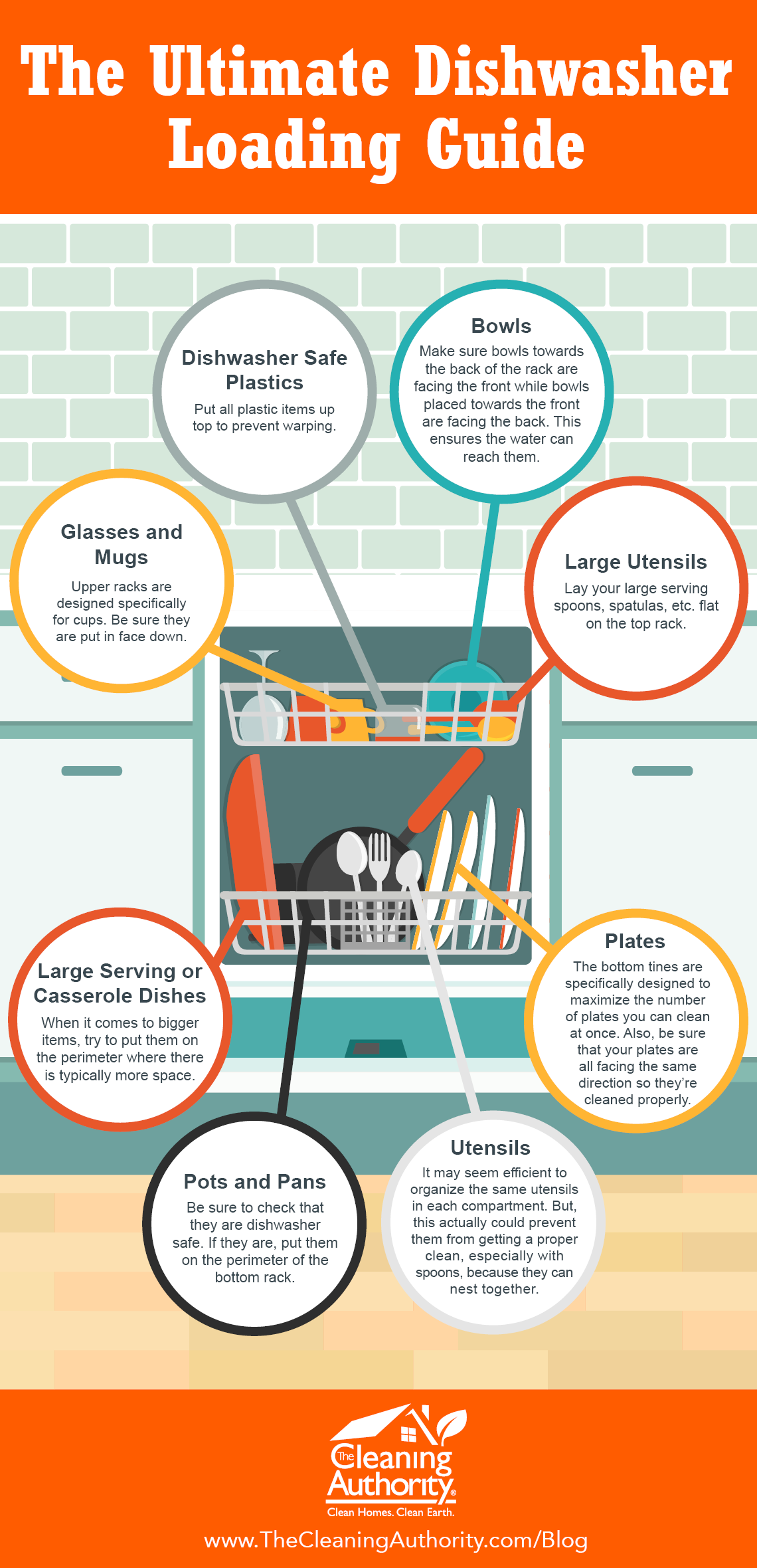
The top rack receives gentler water pressure and is best for delicate items and smaller pieces. That includes:
- Glasses and mugs
- Small bowls
- Dishwasher-safe plastics
- Large utensils, such as serving spoons and spatulas
The bottom rack handles heavy-duty cleaning with stronger water pressure and higher temperatures. Use the bottom rack for heavily-soiled items and sturdy cookware, such as:
- Plates
- Large bowls
- Casserole dishes
- Pots and pans
- Most serving dishes
Place plates between tines and facing the same direction. Angle pots and pans face down so water can reach all surfaces and drain properly.
How to Load the Silverware Basket or Tray
Deciding how to load silverware in a dishwasher depends on your appliance’s design.
If you have a traditional silverware basket, mix utensils to prevent spoons and forks from nesting against each other. Place forks and spoons with handles down, but load knives blade-down to prevent injury when unloading.
If your dishwasher has a third rack for silverware, lay pieces flat with space between each item. This method for cleaning silverware can provide superior results since water can reach all surfaces more evenly. Regardless of your dishwasher setup, separate stainless steel and silver-plated items to prevent tarnishing.
Common Mistakes to Avoid When Loading a Dishwasher
Even minor dishwasher loading errors can compromise cleaning results. Here are common mistakes to avoid:
- Blocking spray arms with large plates or pans.
- Nesting bowls, cups, or spoons together.
- Overcrowding items and preventing water circulation.
- Hazardously loading knives blade-up.
- Putting delicate items on the bottom rack with high water pressure.
- Failing to secure lightweight plastics to prevent flipping.
- Loading items that aren’t dishwasher-safe.
Proper Loading for Special and Delicate Items
Loading delicate wine glasses in a dishwasher requires special attention. Place them on the top, securing stems to prevent movement. Many modern dishwashers have holders to clean cloudy wine glasses and other glassware.
If yours doesn’t have this feature, place wine glasses carefully between tines to prevent jostling during the wash cycle.
Here are tips for how to load a dishwasher with other special items:
- Secure lightweight plastics and food storage containers to prevent flipping.
- Load large baking sheets on the perimeter of the bottom rack to avoid blocking water flow.
- Disassemble baby bottles and sippy cups before loading, securing small parts in the silverware basket.
- Angle items with crevices or narrow openings to allow water to circulate freely.
How to Identify Dishwasher-Safe vs. Hand-Wash Only Items
Knowing how to tell the difference between dishwasher-safe items and ones that should only be washed by hand prevents damage and ensures longevity. Look for dishwasher-safe symbols on the bottom of dishes, typically showing plates and water droplets. When in doubt, check manufacturer guidelines or err on the side of caution.
Items that should never go in the dishwasher include:
- Wooden cutting boards
- Wooden utensils, like mixing spoons and spatulas
- Cast iron cookware
- Nonstick pans with damaged coating
- Fine crystal
- Insulated travel mugs
- Anything with metallic trim
These materials can warp, lose seasoning, crack, or compromise their insulation. It’s best to hand-wash them to preserve their quality and extend their lifespan.
Day-to-Day Dishwasher Maintenance Tips
Proper maintenance keeps your dishwasher running at its best. The first step of knowing how to load soap in a dishwasher is correctly deciding on the right amount of detergent. Typically, one to two tablespoons of detergent or one dishwasher pod is sufficient for a normal load. More doesn’t provide better cleaning and can instead leave residue on dishes.
Run your dishwasher regularly, even for partial loads, to keep standing water from developing odors and bacterial growth. Use the appropriate cycle length for your load size, and clean the dishwasher periodically by running an empty cycle with a half-cup of vinegar on the top rack. Check and clean the filter monthly, and wipe door seals to prevent mold growth.
For a fresh kitchen, wipe down the exterior dishwasher panel and clean your other stainless steel appliances. Clean your garbage disposal regularly to prevent odors from the shared drain line from wafting into the dishwasher.
Trust The Cleaning Authority for All Your House Cleaning Needs
Knowing how to load a dishwasher lets you enjoy sparkling clean silverware, spot-free glassware, and immaculate dinnerware with each cycle.
As you clean your dishes in preparation for your next dinner party, consider how much time you could save with professional house cleaning services for the rest of your home. The Cleaning Authority specializes in thorough, environmentally responsible cleaning that keeps your whole home spotless. Call us at (888) 658-0659 or request a free estimate online today.