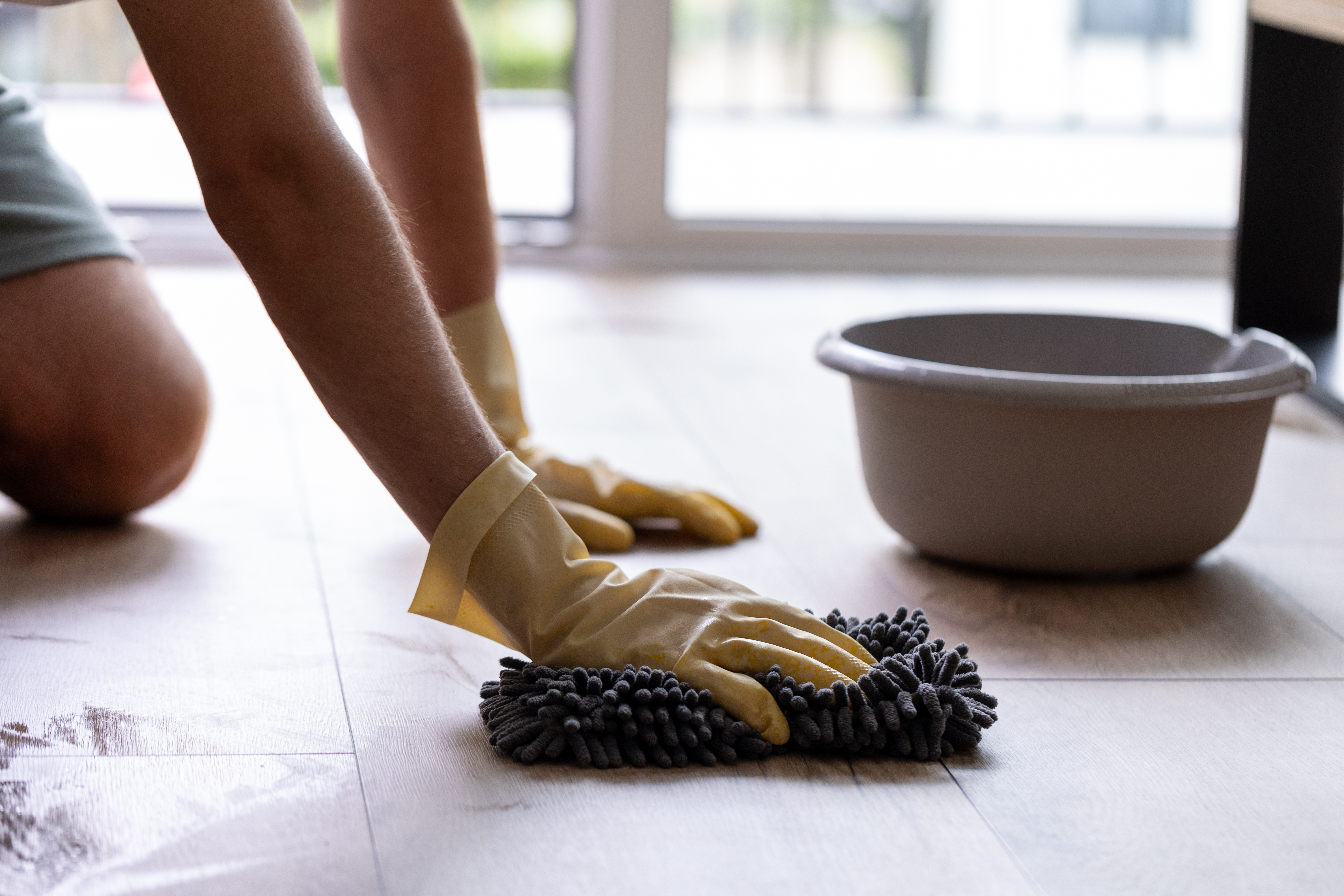
Between crumbs under the table, sticky spots by the fridge, and faint footprints across the tile, your kitchen floor gets heavy traffic every day and collects all of the dirt that comes with it. Even when your appliances and cabinets are spotless, a messy kitchen floor can make your whole space feel grimy. With the right cleaning tools and techniques, a freshly scrubbed floor can instantly brighten and refresh your kitchen.
In this guide, you'll learn how to clean every type of kitchen flooring, including tile, marble, and hardwood, using only simple, environmentally responsible ingredients. Whether you’re tackling stained grout lines or just keeping up with everyday messes, we’ve got you covered.
Kitchen Floor Cleaning Supplies
Gather these cleaning basics—they’re gentle and safe for most floors, but check your floor manufacturer’s specific care instructions before cleaning, especially for hardwood, stone, or specialty finishes.
Microfiber mop or reusable mop with washable pads
Vacuum or broom, preferably with a soft-bristle head for delicate surfaces
Distilled white vinegar
Baking soda
Mild dish soap
Warm water
Spray bottle for spot cleaning
Soft cloths or sponges
Soft bristle brush or old toothbrush
How to Clean Tile Floors & Grout
Tile floors are durable and water-resistant, but grout lines can trap dirt and grease if not cleaned regularly. Here’s how to clean your tile floors:
Step 1: Sweep or vacuum to remove crumbs and loose dirt.
Step 2: Mop with a solution of one gallon of warm water and half a cup of distilled white vinegar. This lifts grime and cuts through grease naturally.
Step 3: For stubborn stains, add a few drops of dish soap to the mop water.
Use natural solutions like vinegar to lift grime and prevent residue buildup that can dull tile and weaken grout.
How to Clean Grout
Grout lines often require extra attention to address deeper stains. Follow these steps to leave your grout looking bright and stain-free:
Step 1: Sprinkle baking soda directly onto the grout lines.
Step 2: Spray with vinegar to create a fizzing action that loosens grime.
Step 3: Scrub gently with a soft-bristled brush or old toothbrush.
Step 4: Rinse with clean water and dry with a cloth.
Skip the bleach or harsh cleaners, which can erode grout over time.
If you’re cleaning the cabinets above your tile floor too, take care of the grout first and the cabinets last. Scrubbing grout can splash water and dirt onto already-clean cabinets.
How to Clean Hardwood Floors
Hardwood floors require gentle care to avoid scratches and water damage. Here’s how to clean your hardwood floors to maintain their look and durability:
Step 1: Sweep or vacuum with a soft brush attachment to remove dirt and grit.
Step 2: Mix a solution of one gallon of warm water and a few drops of mild dish soap.
Step 3: Lightly dampen a microfiber mop and clean in the same direction as the wood grain.
Step 4: Dry the floor immediately with a clean towel.
Mild cleaners preserve your floor’s protective finish and prevent harmful chemicals from seeping into the wood and damaging it.
How to Clean Laminate Floors
Laminate flooring mimics the look of hardwood but needs a slightly different approach. Gentle, natural cleaners prevent warping and protect the laminate’s top layer from premature wear.
Step 1: Sweep or vacuum with a soft-bristle attachment.
Step 2: Mop with a solution of one gallon of warm water mixed with one teaspoon of vinegar for light cleaning.
Step 3: Use a barely damp microfiber mop to avoid water seeping into seams.
Avoid steam mops and abrasive scrubbers, as they can damage the protective layer.
How to Clean Vinyl Floors
Vinyl flooring is low-maintenance, moisture-resistant, and easy to clean. Follow these steps:
Step 1: Vacuum or sweep to remove dirt and crumbs.
Step 2: Mix a solution of one gallon of warm water, half a cup of vinegar, and a few drops of dish soap.
Step 3: Mop using a microfiber pad, then rinse with clean water.
Step 4: For scuff marks, rub gently with a soft cloth dipped in baking soda.
Avoid harsh cleaners, which can discolor vinyl or cause brittleness and cracks.
How to Clean Linoleum Floors
Linoleum is durable but benefits from gentle cleaning and proper drying.
Step 1: Sweep or vacuum to remove debris.
Step 2: Mop with a solution of one gallon of warm water and 1/4 cup of white vinegar.
Step 3: Dry the floor completely to prevent water spots.
Step 4: Buff with a soft, dry cloth for extra shine.
Avoid using chemical cleaners on linoleum. Natural cleaners complement linoleum’s environmentally friendly composition, protect its finish, and extend its lifespan.
How to Clean Stone Floors (Slate, Marble, and Granite)
Slate, marble, and other stone floors bring beauty to your kitchen but require extra care to avoid etching or staining. Using the wrong cleaners can permanently damage delicate and porous stone surfaces and their protective finishes, making natural, gentle products essential.
General Tips for Cleaning Stone Floors
Consider these best practices for cleaning stone floors:
Only use pH-neutral cleaners (skip vinegar or citrus-based solutions, which can damage stone).
Wipe spills immediately to prevent staining.
Avoid abrasive brushes.
How to Clean Slate Floors
Sweep slate floors regularly to remove dirt and grit that can scratch the surface. Mop with warm water and a few drops of dish soap, then dry with a microfiber cloth to prevent water spots.
How to Clean Marble and Granite Floors
Marble and granite are sensitive to harsh cleaners. Use a dry dust mop daily to prevent scratches. For deeper cleaning, mop using a mixture of one gallon of warm water and one teaspoon of mild dish soap.
Follow these same general practices for cleaning your countertops.
Tips for Keeping the Kitchen Floor Cleaner, Longer
With just a few small habits, you can keep your kitchen floor looking freshly cleaned for longer and save yourself time down the road by reducing grime between cleanups.
Place mats at entryways to catch dirt and moisture.
Clean up spills as soon as they happen to prevent stains or warping.
Sweep or vacuum daily to stop crumbs from scratching delicate finishes.
Deep clean once a week (or more often in high-traffic kitchens).
Want to tackle more than just your floors? Start with our Ultimate Kitchen Cleaning Guide for an entire kitchen refresher.
The Cleaning Authority is Here to Help
Keeping your kitchen floor spotless takes time and effort, especially if you’re managing a busy household. Let The Cleaning Authority help with the hard work. The Cleaning Authority’s professional house cleaners use environmentally responsible products and years of experience to give your kitchen floors (and the rest of your home) a thorough clean.
Request your free estimate today or call us at (888) 658-0659.